How Long Does Retinol Take To Work
A practical step-by-step guide to how long does retinol take to work, including preparation, instructions, common issues, tips, and next steps.

How Long Does Retinol Take To Work
Retinol is a powerful skincare ingredient that can significantly improve skin texture and appearance, but it's not a quick fix. You can typically expect to start seeing initial changes in your skin after 2 to 4 weeks of consistent use, with more noticeable and significant improvements taking 3 to 6 months or even longer. This guide will walk you through the journey of incorporating retinol into your routine, explaining what to expect and how to achieve the best results over time.
Fast Answer
- Initial changes: 2-4 weeks
- Noticeable improvements: 3-6 months
- Full results: Up to 12 months
- Key factor: Consistency
Before You Start
- A gentle cleanser: To prepare your skin without stripping it.
- A hydrating moisturiser: To combat potential dryness and support your skin barrier.
- Broad-spectrum SPF 30+ sunscreen: Essential daily protection, as retinol makes skin more sun-sensitive.
- Your chosen retinol product: Start with a low concentration (e.g., 0.25% or 0.5%) if you're new to retinol.
- Patience and consistency: These are your most important tools.
- Understanding your skin: Knowing if your skin is sensitive can help you start gently.
Step-by-Step Instructions
Step 1: Start Slow and Low
When you first introduce retinol to your skincare routine, it's crucial to begin with a low concentration product and use it infrequently. This "slow and low" approach allows your skin to gradually adjust to the ingredient, minimising potential irritation, redness, and dryness – often referred to as "retinisation."
For your first few weeks, aim to apply a pea-sized amount of retinol to your entire face just twice a week, on non-consecutive nights. For example, you might use it on Monday and Thursday evenings. This initial phase is about building your skin's tolerance. Don't rush into daily use, even if you don't immediately feel any side effects. Your skin needs time to adapt at a cellular level.
Step 2: Cleanse and Fully Dry Your Skin
Before applying retinol, it's essential to cleanse your face thoroughly to remove make-up, dirt, and impurities. Use a gentle, hydrating cleanser that won't strip your skin of its natural oils. After cleansing, gently pat your skin dry with a clean towel. This step is more critical than you might think.
Wait for your skin to be completely dry – typically about 10 to 20 minutes – before applying retinol. Applying retinol to damp skin can increase its absorption and lead to greater irritation, as water can enhance its penetration. This waiting period allows your skin's pH to stabilise and reduces the risk of adverse reactions, ensuring a smoother introduction to this powerful ingredient.
Step 3: Apply a Pea-Sized Amount
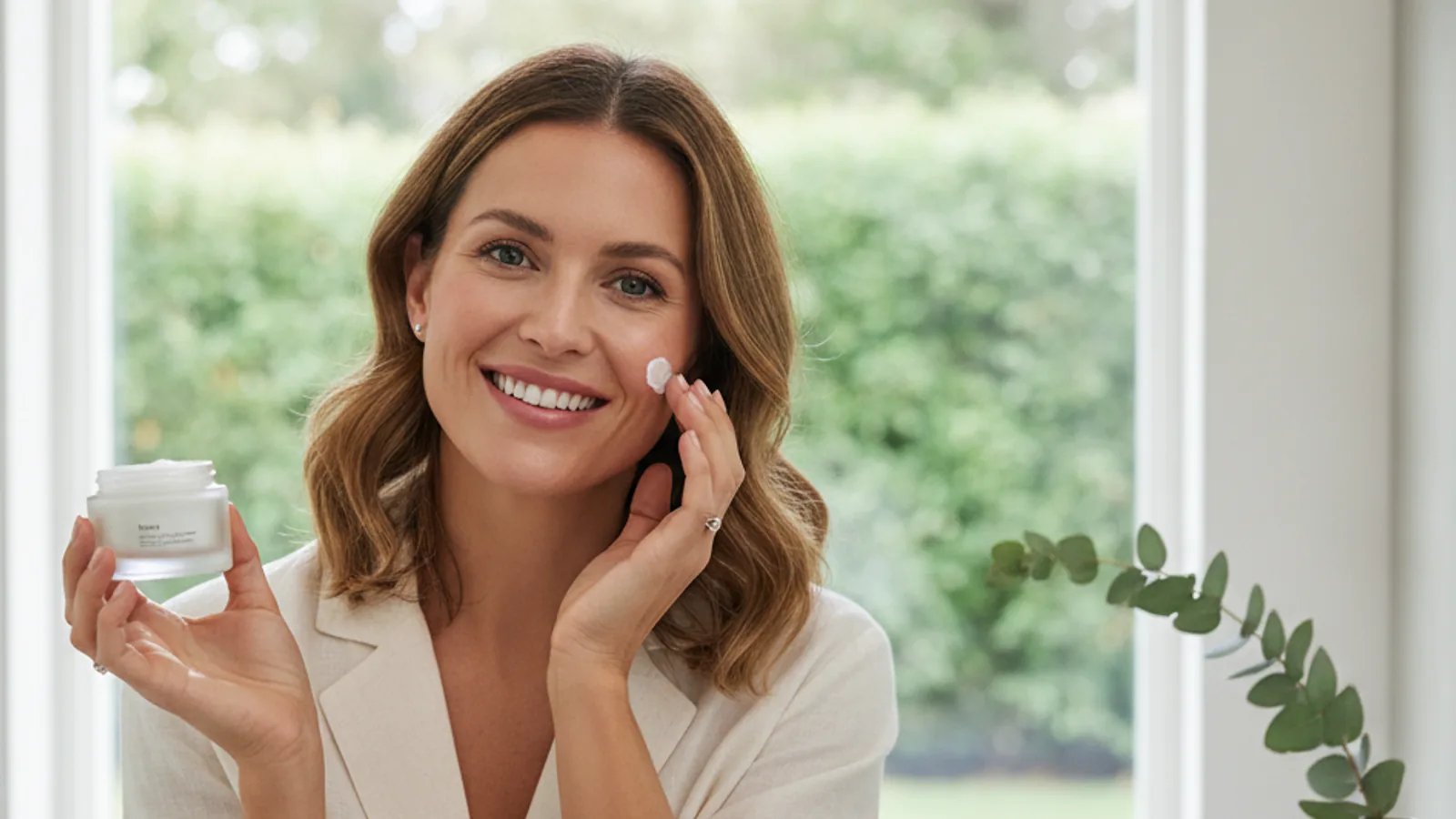
Less is often more when it comes to retinol. A pea-sized amount is generally sufficient for your entire face. Dispense this small amount onto your fingertips and gently dab it onto your forehead, cheeks, chin, and nose. Then, spread it evenly across your face, avoiding the delicate areas around your eyes, nostrils, and lips, which are more prone to irritation.
Using too much retinol will not speed up the process and will only increase your chances of experiencing redness, peeling, and sensitivity. Focus on even coverage rather than liberal application. Remember that retinol works by penetrating the skin cells to encourage turnover, not by sitting on the surface in a thick layer.
Step 4: Follow with a Hydrating Moisturiser
After applying retinol, allow a few minutes for it to absorb into your skin – typically 5 to 10 minutes. Once absorbed, follow up with a rich, hydrating moisturiser. This step is non-negotiable, especially during the initial retinisation phase, as retinol can be drying.
A good moisturiser helps to lock in hydration, soothe the skin, and reinforce your skin's natural barrier, which can become compromised as retinol works its magic. Look for moisturisers containing ingredients like hyaluronic acid, ceramides, and niacinamide, as these are excellent for hydration and barrier support. Applying moisturiser after retinol helps to mitigate dryness and flaking, making the experience more comfortable and sustainable.
Step 5: Gradually Increase Frequency
Once your skin has adapted to using retinol twice a week without significant irritation (this usually takes 2 to 4 weeks), you can consider increasing the frequency. The key word here is "gradually." Increase to every other night for another 2 to 4 weeks.
Again, observe your skin carefully. If you experience excessive dryness, peeling, or sensitivity, reduce your usage back to the previous frequency until your skin calms down. The goal is consistent, comfortable use, not rapid escalation. Only when your skin tolerates every-other-night use comfortably should you attempt to use it every night. This slow progression is vital for minimising side effects and allowing your skin to build resilience over time. Pushing too hard too fast will only lead to a compromised skin barrier and set back your progress.
Step 6: Never Skip Daily Sun Protection
This step is absolutely critical and applies from the moment you start using retinol. Retinol increases your skin's sensitivity to the sun, making it more vulnerable to sunburn and sun damage. Therefore, daily application of a broad-spectrum sunscreen with an SPF of 30 or higher is non-negotiable, even on cloudy days or when you're mostly indoors.
Sunscreen protects your skin from harmful UV rays, preventing the very damage that retinol aims to correct, such as fine lines, wrinkles, and hyperpigmentation. Without consistent sun protection, you risk undoing all the benefits of your retinol routine and potentially causing further skin issues. Make it the last step in your morning skincare routine every single day.
Step 7: Understand the Timeline of Results
Knowing what to expect and when will help you stay patient and consistent. The effects of retinol are cumulative and appear gradually:
- Weeks 1-4 (Initial Phase): You might experience the retinisation period, with some dryness, flaking, or mild redness. Your skin is adjusting. You may notice a slight improvement in skin texture, feeling a bit smoother.
- Months 1-3 (Early Improvements): After the initial adjustment, you should start to see more noticeable improvements. Fine lines may appear softened, skin tone might look more even, and breakouts could reduce. Your skin will feel smoother and look more radiant.
- Months 3-6 (Significant Changes): This is when many users report significant and consistent results. Deeper wrinkles may appear less prominent, hyperpigmentation (dark spots) might fade considerably, and overall skin firmness and elasticity can improve. Skin clarity and texture will be noticeably better.
- Months 6-12+ (Full Benefits and Maintenance): With continued, consistent use, you will reap the full benefits of retinol. Your skin will look its best, with sustained improvements in all areas. Retinol becomes a powerful maintenance tool to preserve youthful skin and prevent future damage.
Remember, everyone's skin is unique, so your personal timeline might vary slightly. The key is consistent application and patience.
Quick Reference
| Situation | Use this | Why |
|---|---|---|
| New to retinol, sensitive skin | Start twice a week, low concentration (0.25%) | Minimises irritation and allows skin to adapt slowly. |
| Skin is tolerating 2-3 times/week | Increase to every other night | Gradually builds tolerance for more frequent use. |
| Experiencing dryness or flaking | Reduce frequency or use "sandwich method" | Allows skin to recover and strengthens its barrier. |
| Skin feels comfortable with every-other-night use | Consider moving to every night (if desired) | Maximises benefits once tolerance is built. |
| Always, every morning | Apply SPF 30+ sunscreen | Retinol increases sun sensitivity; protects results and prevents damage. |
Common Problems When You Use Retinol
Problem: Redness, Dryness, or Peeling (The "Retinisation" Period)
This is the most common experience when starting retinol and can be disheartening if you're not expecting it. Your skin is adapting to the increased cell turnover that retinol promotes. It often appears as mild irritation, flakiness, or a feeling of tightness. This is normal but can be uncomfortable.
Fix:
- Reduce Frequency: If you're using it every other night, scale back to twice a week. If you're already at twice a week, try once a week for a period.
- Use the Sandwich Method: Apply a light layer of moisturiser, then your pea-sized amount of retinol, then another layer of moisturiser. This creates a buffer.
- Focus on Hydration: Use a richer, more soothing moisturiser. Look for ingredients like ceramides, hyaluronic acid, and glycerin to support your skin barrier.
- Avoid Other Actives: Temporarily stop using other strong active ingredients like AHAs, BHAs, or Vitamin C on the same nights as retinol, or even for a few days after, until your skin settles.
Problem: Breakouts or "Purging"
Some individuals experience an initial breakout phase when starting retinol, often called "purging." This happens because retinol speeds up cell turnover, bringing existing micro-comedones (clogged pores) to the surface faster. It typically appears as small whiteheads or blackheads in areas where you usually break out, and it's temporary.
Fix:
- Be Patient: Purging usually lasts for 2-6 weeks. Do not stop using retinol unless the breakouts are severe, painful cysts or appear in areas where you don't normally break out (which might indicate an allergic reaction).
- Maintain Your Routine: Continue with your gentle cleansing, retinol, and moisturising routine. Consistency is key to getting past this phase.
- Resist Picking: Picking at purging spots will only worsen inflammation and can lead to scarring. Let your skin clear naturally.
- Re-evaluate Products: Ensure your other skincare products (cleanser, moisturiser) are non-comedogenic and not contributing to clogs.
Problem: Not Seeing Results
After several weeks or even months, you might feel like your skin isn't improving as expected. This can be frustrating, especially with the patience required for retinol. Remember that visible changes are gradual and sometimes subtle.
Fix:
- Review Your Consistency: Are you using retinol regularly as per your established tolerance? Skipping too many applications will delay results.
- Check Concentration: If you started with a very low concentration (e.g., 0.25%) and have been using it consistently for 3-6 months without issues, it might be time to consider moving up to a slightly higher strength (e.g., 0.5% or 1%).
- Assess Your Overall Routine: Are you protecting your skin from the sun daily? Is your diet and hydration adequate? External factors significantly impact skin health and the efficacy of your products.
- Manage Expectations: Remember that full results can take up to 12 months. Fine lines and texture improve first, while deep wrinkles and significant hyperpigmentation take longer.
Advanced Tips for How Long Retinol Takes To Work
Once you've mastered the basics and your skin is well-adjusted to retinol, there are several ways you can optimise your routine and enhance the benefits, potentially speeding up or improving the quality of your results over the long term.
Consider Different Forms of Retinoids
Retinol is a type of retinoid. There are many other forms available, each with different strengths and conversion rates in the skin. If you've been using a standard retinol for a year and feel you need more, you might explore other options:
- Retinaldehyde (Retinal): This is one step closer to retinoic acid (the active form) than retinol, making it more potent and often faster-acting than retinol, with potentially less irritation than prescription options.
- Granactive Retinoid: A newer, gentler retinoid ester that offers similar benefits to traditional retinol but with less irritation, making it suitable for sensitive skin types who want to advance.
- Prescription Retinoids (Tretinoin/Retinoic Acid): These are the strongest forms and are direct retinoic acid, meaning they don't need to be converted by the skin. They are highly effective but require a prescription and careful medical guidance due to their potency and potential for side effects. Discuss this with a dermatologist if you're seeking the strongest possible results.
Strategic Layering with Other Actives
Once your skin is fully accustomed to retinol, you can carefully reintroduce or layer other beneficial ingredients, but timing and product order are crucial. The goal is to avoid irritation while maximising synergy.
- Vitamin C (Morning): Use Vitamin C in your morning routine to provide antioxidant protection and brighten skin, while reserving retinol for the evening. This separation avoids potential pH conflicts and irritation.
- Hyaluronic Acid (With Retinol): Always layer hyaluronic acid before or with your retinol. It draws moisture into the skin, helping to hydrate and plump, which can counteract retinol's drying effects.
- Niacinamide (With Retinol): Niacinamide (Vitamin B3) can be used alongside retinol. It strengthens the skin barrier, reduces inflammation, and can even help to calm irritation caused by retinol. Many formulations combine these two ingredients effectively.
- AHAs/BHAs (Separate Nights): If you wish to use exfoliating acids, use them on alternating nights to retinol. For example, use an AHA toner on Tuesday night and retinol on Monday and Wednesday nights. Never use them on the same night unless specifically formulated to be gentle together, as this can severely compromise your skin barrier.
Listen to Your Skin's Feedback
The most advanced tip is always to be highly attuned to your skin. Skin health is dynamic and can change due to stress, diet, weather, and hormones. If your skin suddenly feels more sensitive, irritated, or dry, even after months of comfortable retinol use, it's a sign to scale back.
- Take a "Retinol Holiday": Sometimes a few days or even a week off retinol can allow your skin barrier to fully recover.
- Adjust Usage: If your skin often feels a little dry, stick to every-other-night use rather than pushing for nightly application. More isn't always better for every skin type.
- Hydrate from Within: Ensure you're drinking plenty of water and maintaining a healthy diet to support overall skin health.
By understanding these nuances, you can tailor your retinol journey to achieve optimal results while maintaining a healthy, resilient skin barrier.
How Long Does Retinol Take To Work FAQ
Q: What does retinol actually do to my skin?
A: Retinol works by encouraging faster cell turnover, meaning your skin sheds old, dead cells more quickly and brings new, fresh cells to the surface. It also stimulates collagen production, which helps to plump the skin and reduce the appearance of fine lines and wrinkles. Over time, it can improve skin texture, tone, firmness, and reduce the look of hyperpigmentation and breakouts.
Q: Can I speed up how long retinol takes to work?
A: Not really in a healthy way. Attempting to speed up results by using more product, a higher concentration too soon, or applying it more frequently than your skin can tolerate will likely lead to irritation, dryness, and a compromised skin barrier. This can actually set back your progress. Patience and consistent, gentle use are the fastest routes to healthy, lasting results.
Q: What if I don't experience any redness or peeling? Is my retinol working?
A: Yes, absolutely! Not everyone experiences significant peeling or irritation. This can depend on your skin type, the specific retinol formulation (some are gentler than others), and how slowly you introduced it. A lack of visible side effects doesn't mean the product isn't working at a cellular level. As long as you're consistent, the benefits will still accumulate over time.
Q: How long should I wait between applying retinol and moisturiser?
A: It's generally recommended to wait 5-10 minutes after applying retinol before layering your moisturiser. This allows the retinol to fully absorb into the skin without being diluted or disturbed. If you have very sensitive skin, you might even wait a bit longer, or use the "sandwich method" as described earlier.
Q: Can I use retinol around my eyes?
A: The skin around the eyes is very delicate and thinner than the rest of your face, making it more prone to irritation. Many general retinol products advise avoiding this area. However, there are specific retinol-based eye creams formulated at lower concentrations and with added soothing ingredients that are designed for use around the eyes. If using a general retinol, apply it carefully, avoiding the immediate under-eye area and eyelids, or use the "sandwich method" with extra caution.
Q: What happens if I stop using retinol? Will my results disappear quickly?
A: If you stop using retinol, your skin will gradually revert to its previous state. The benefits you've gained, such as increased collagen production and faster cell turnover, will slow down. It won't happen overnight, but over weeks and months, you may notice a return of fine lines, uneven texture, and a duller complexion. Retinol is a commitment for ongoing benefits.
Q: How long does a "retinol purge" last?
A: A retinol purge typically lasts for 2 to 6 weeks. This is the period during which retinol speeds up cell turnover, bringing existing congestion to the surface. If breakouts persist beyond this timeframe, or if you're experiencing severe, painful cystic acne in new areas, it might not be a purge and could indicate a different reaction or incompatibility. In such cases, it's best to consult a dermatologist.
Q: Can I use retinol every night forever?
A: Many people can successfully use retinol every night once their skin has fully adapted. However, it's not a strict requirement for everyone. Some individuals find that using it 3-4 times a week is sufficient to maintain benefits without any irritation. Always listen to your skin's needs. If nightly use causes persistent dryness or sensitivity, scaling back slightly is perfectly fine and often recommended for long-term skin health.
Final Checklist for How Long Does Retinol Take To Work
- You have started with a low concentration and frequency.
- You apply retinol only to clean, completely dry skin.
- You use only a pea-sized amount for your entire face.
- You always follow retinol with a hydrating moisturiser.
- You apply broad-spectrum SPF 30+ sunscreen every single morning.
- You are gradually increasing frequency only when your skin tolerates it.
- You understand that initial changes take 2-4 weeks and significant results take 3-6 months.
- You are prepared for potential dryness, flaking, or a "purge" during the initial adjustment phase.
- You are being patient and consistent with your routine.
- You are listening to your skin and adjusting usage if irritation occurs.